

Save 40% Today · Code PROXIVA40
Where to Buy Peptides: What Researchers Need to Know
Finding a reliable source when deciding where to buy peptides is one of the most critical decisions a researcher can make. The quality of research compounds directly impacts experimental reproducibility, data integrity, and the validity of published findings. In a market with varying standards and limited regulation, understanding how to evaluate peptide suppliers is essential for any serious research program.
This guide covers everything researchers need to know about sourcing research peptides — from understanding purity testing methods to identifying red flags in suppliers. Whether you’re setting up a new laboratory or evaluating alternative sources, these principles will help ensure your research compounds meet the standards your work demands. Proxiva Labs provides all products with verified third-party testing and Certificates of Analysis — explore our full research peptide catalog.
Why Peptide Source Quality Matters for Research
Peptide quality isn’t merely a procurement concern — it’s a scientific integrity issue. Impure or mislabeled compounds introduce confounding variables that can invalidate entire studies.
Research Reproducibility
The scientific community faces an ongoing reproducibility crisis, and reagent quality is a significant contributing factor. A peptide advertised as 98% pure that actually tests at 85% contains 13% unknown contaminants — truncated sequences, deletion peptides, residual solvents, or counterions — any of which could produce biological effects that confound experimental results.
Dose-Response Accuracy
If your peptide is less pure than stated, your actual active compound dose is proportionally lower than calculated. A 10 mcg/kg dose from a 75% pure sample delivers only 7.5 mcg/kg of active peptide. This discrepancy can shift dose-response curves, alter EC50 calculations, and make protocol optimization unreliable.
Publication Standards
Leading journals increasingly require documentation of reagent sourcing and quality verification. Having independently verified Certificates of Analysis (COAs) from your peptide supplier strengthens manuscript submissions and peer review outcomes.
Red Flags: How to Spot Unreliable Peptide Suppliers
The research peptide market includes both legitimate suppliers and those cutting corners. Watch for these warning signs:
- No third-party testing — Suppliers who only provide in-house testing (or no testing at all) have an obvious conflict of interest. Independent verification is non-negotiable.
- Vague or missing COAs — A legitimate COA includes specific batch/lot numbers, testing dates, methodology used (HPLC, MS), actual purity percentages, and the testing laboratory’s identity.
- Unrealistically low prices — Peptide synthesis, purification, and testing have real costs. Prices significantly below market suggest corners are being cut — lower purity grade, smaller actual quantities, or substituted compounds.
- No physical address or contact information — Legitimate suppliers maintain verifiable business addresses and responsive customer support.
- Health claims or dosing instructions — Research peptide suppliers should not provide human dosing guidance. Those making therapeutic claims may be operating outside regulatory bounds.
- No batch-specific testing — Some suppliers post a single COA and apply it to all future batches. Each production batch should be independently tested.
What to Look For in a Peptide Supplier
A quality-focused peptide supplier should demonstrate:
- Independent third-party testing for every batch produced
- Publicly available COAs with batch-specific data
- Clear product labeling with accurate molecular weights, sequences, and quantities
- Proper storage and shipping protocols (cold chain for temperature-sensitive compounds)
- U.S.-based manufacturing in facilities following Good Manufacturing Practices (GMP)
- Responsive customer support staffed by people who understand the products
- Transparent business practices — clear return policies, verifiable business registration
- Research-only positioning — not making therapeutic claims or providing human dosing instructions
Understanding Peptide Purity Testing
Purity testing is the cornerstone of peptide quality verification. Understanding these methods helps researchers evaluate supplier claims.
HPLC (High-Performance Liquid Chromatography)
HPLC is the gold standard for peptide purity assessment. Reverse-phase HPLC separates the target peptide from impurities based on hydrophobicity. The resulting chromatogram shows peaks for each component, with the target peptide peak area expressed as a percentage of total peak area. Research-grade peptides typically require ?95% purity by HPLC, with premium grades exceeding 98-99%.
Mass Spectrometry (MS)
Mass spectrometry confirms molecular identity by measuring the mass-to-charge ratio of the peptide. MALDI-TOF (Matrix-Assisted Laser Desorption/Ionization – Time of Flight) and ESI-MS (Electrospray Ionization) are the most common MS methods. The observed molecular weight should match the theoretical molecular weight within instrument accuracy (typically ±0.1-1.0 Da).
LC-MS (Combined HPLC + Mass Spec)
The most comprehensive approach combines HPLC separation with mass spectrometric detection. LC-MS simultaneously confirms purity (chromatographic separation) and identity (mass confirmation), providing the highest confidence in both what the compound is and how pure it is.
Amino Acid Analysis (AAA)
AAA hydrolyzes the peptide into individual amino acids and quantifies each one. This confirms the amino acid composition matches the expected sequence and provides accurate peptide content measurement (important for dosing calculations, as lyophilized peptides contain counterions and absorbed moisture).
Third-Party Testing: Why It’s Non-Negotiable
In-house quality control is a starting point, but independent third-party verification is what separates credible suppliers from the rest.
Third-party testing eliminates supplier bias — the testing laboratory has no financial stake in the results. It also provides documentation that stands up to scrutiny in publication, grant applications, and institutional review. Proxiva Labs subjects every batch to independent laboratory testing and makes results available to researchers.
Peptide Storage and Handling Best Practices
Even the purest peptide will degrade if improperly stored. Best practices include:
- Lyophilized peptides: Store at -20°C for long-term stability. Most lyophilized peptides remain stable for 12+ months at -20°C and 2+ years at -80°C.
- Reconstituted peptides: Store at 2-8°C (refrigerator) and use within 2-4 weeks. Never refreeze reconstituted peptides — freeze-thaw cycles cause aggregation and degradation.
- Avoid repeated freeze-thaw: Aliquot reconstituted peptides into single-use volumes before freezing.
- Protect from light: Many peptides are photosensitive. Store in amber vials or wrapped in foil.
- Use appropriate solvents: Most peptides reconstitute well in bacteriostatic water or sterile water. Highly hydrophobic peptides may require DMSO or dilute acetic acid.
Reconstitution and Bacteriostatic Water
Proper reconstitution is critical for maintaining peptide integrity:
- Use bacteriostatic water (0.9% benzyl alcohol) for multi-use vials — the preservative prevents microbial growth
- Direct the solvent stream against the vial wall, not directly onto the peptide cake — this prevents denaturation from mechanical stress
- Allow the peptide to dissolve gradually — gentle swirling is acceptable but avoid vigorous shaking
- Calculate reconstitution volume based on desired concentration: Volume (mL) = peptide amount (mg) / desired concentration (mg/mL)
Most Popular Research Peptides
Researchers frequently source these compounds for various study areas:
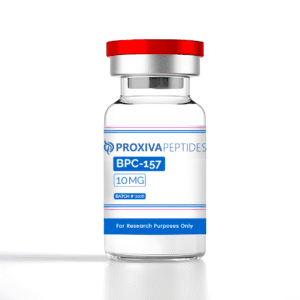
- BPC-157 — tissue repair, gut healing, neuroprotection research
- TB-500 — wound healing, cardiac repair, anti-inflammation
- Semaglutide — GLP-1 agonist, metabolic and cardiovascular research
- CJC-1295 — growth hormone axis, body composition
- AOD 9604 — fat metabolism, cartilage regeneration
Domestic vs International Peptide Suppliers
Researchers in the United States face a choice between domestic and international suppliers. Key considerations:
- Shipping speed: Domestic orders typically arrive in 1-3 business days vs 2-4 weeks internationally
- Cold chain integrity: Shorter transit times reduce temperature exposure risk. International shipments may spend days in customs warehouses without temperature control.
- Regulatory oversight: U.S. manufacturers operate under FDA facility registration and state pharmacy board regulations. International suppliers may operate under different (or no) quality frameworks.
- Customs risk: International peptide shipments may be detained or seized at customs, creating delays and losses.
- Recourse: Disputes with domestic suppliers can be resolved through U.S. consumer protection and business law. International recourse is significantly more difficult.
Legal Considerations for Research Peptide Purchases
Research peptides occupy a specific legal category in the United States. They are not approved drugs, dietary supplements, or controlled substances (with specific exceptions). They are legal to purchase, possess, and use for legitimate research purposes including in vitro studies, animal research, and analytical chemistry.
Key legal considerations include:
- Research peptides must be labeled “For Research Use Only — Not for Human Consumption”
- Researchers should maintain documentation of their research purpose
- Institutional buyers should ensure peptide purchases align with their facility’s compliance requirements
- Some specific compounds may have additional regulatory restrictions — always verify current status
How Proxiva Labs Ensures Quality
At Proxiva Labs, quality isn’t a marketing claim — it’s the foundation of our business. Our quality framework includes:
- U.S. manufacturing in FDA-registered, GMP-certified facilities
- Third-party laboratory testing for every batch, with results published on our website
- ?99.99% verified purity on all released products
- Batch-specific COAs available for every lot number
- Same-day shipping from our U.S. facility with temperature-appropriate packaging
- Discreet, insured delivery with full tracking on every order
Learn more about our commitment to research excellence on our About page, or browse our complete research peptide catalog.
Frequently Asked Questions
Are research peptides legal to buy?
Yes, research peptides are legal to purchase and possess for legitimate research purposes in the United States. They must be labeled for research use only and are not intended for human consumption.
What purity level should I look for?
For most research applications, ?95% purity by HPLC is the minimum standard. For studies requiring high precision (dose-response, binding assays), ?98% is recommended. Proxiva Labs maintains ?99% purity across all products.
How do I verify a supplier’s COA is legitimate?
A legitimate COA includes: the testing laboratory’s name and contact information, specific batch/lot numbers, testing date, methodology used (HPLC method details, MS parameters), actual numerical results (not just “pass/fail”), and an authorized signature. You can also contact the listed testing laboratory directly to verify.
Should I buy from the cheapest supplier?
Price should not be the primary selection criterion for research compounds. Impure or mislabeled peptides waste far more money through failed experiments and unreliable data than the cost difference between suppliers. Evaluate total cost of quality — including the value of your time and research integrity.
Conclusion
Knowing where to buy peptides is fundamentally about understanding quality — how to verify it, how to demand it, and how to recognize when it’s absent. Third-party testing, transparent COAs, proper manufacturing standards, and responsive support are the hallmarks of a supplier worthy of your research. The compound quality you accept sets the ceiling for your experimental outcomes.
Explore our research peptide catalog with verified ?99.99% purity, and review our published test results for every batch we release.
All products are sold strictly for research purposes only. Not for human consumption.